Pilates Reformer for Lower Back Pain – benefits & best exercises
Lower back pain affects people from all walks of life, even Athletes and it’s one of the most common reasons for people to try Pilates. If you’re tired of battling stiffness and tightness in the back, then Pilates Reformer exercises are likely to be a safe and very effective way to get relief.
Unlike high-impact gym workouts or those clunky old gym machines, the Pilates Reformer takes pressure off your spine while simultaneously tightening up those deep core muscles that are meant to be protecting it. The movements on the Reformer are typically slow and controlled, and they’re all designed to get the areas in your body that are causing you back pain, to actually start working properly again.
In this guide we’ll then cover,
–why you are dealing with lower back pain in the first place
– how Pilates Reformer can actually help
– best exercises to focus on to get the long-term relief that you need
– Reformer suggestions
Why Lower Back Pain Happens
It’s first helpful to understand why lower back pain typically develops. Then we can better address it with helpful exercises. Lower back pain comes from a combination of:
✔ Weak deep core muscles
When the transverse abdominis and multifidus are weak, the lumbar spine loses stability.
✔ Tight hip flexors
Long periods of sitting shorten the hip flexors, pulling the pelvis forward and compressing the lumbar spine.
✔ Weak glutes
When the glutes don’t activate properly, the lower back overworks to compensate.
✔ Poor posture
Rounded shoulders, forward head posture, and a collapsed ribcage all increase lumbar strain.
✔ Muscle imbalances
One side of the body often works harder than the other, creating rotational tension around the spine.
✔ Reduced mobility
Stiff thoracic spine = excessive movement in the lumbar spine → pain.
Most people suffering from back pain have more than one of these issues and this is where the Pilates Reformer helps.
How Pilates Reformer Helps Lower Back Pain
- Strengthens Deep Core Muscles
- Transverse abdominis
- Multifidus
- Pelvic floor
- Obliques
- Improves Pelvic Stability
- Lengthens Tight Muscles Without Strain
- Hip flexors
- Hamstrings
- Glutes
- Quadriceps
- Corrects Muscle Imbalances
- Enhances Postural Alignment
- shoulder alignment
- rib placement
- pelvic positioning
- spinal stacking
- Low-Impact and Safe for Sensitive Backs
- smooth, gliding movements
- controlled tension
- supported positions
- no compression on joints
Best Pilates Reformer Exercises for Lower Back Pain
Below are five safe, effective exercises ideal for people with lumbar discomfort.
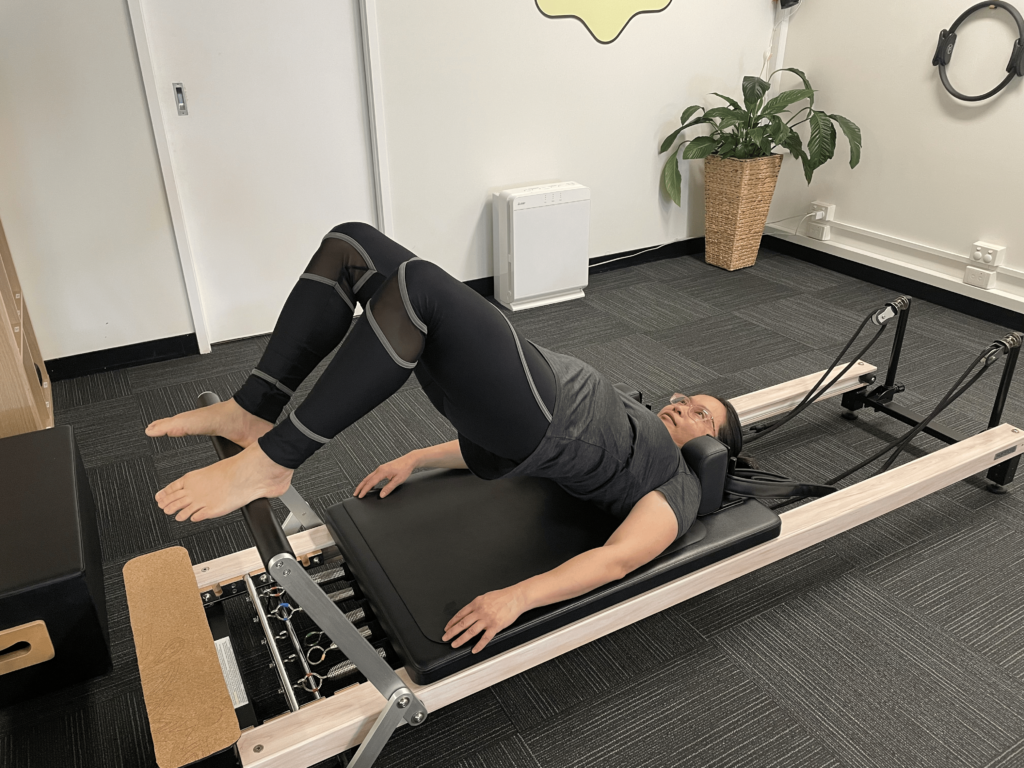
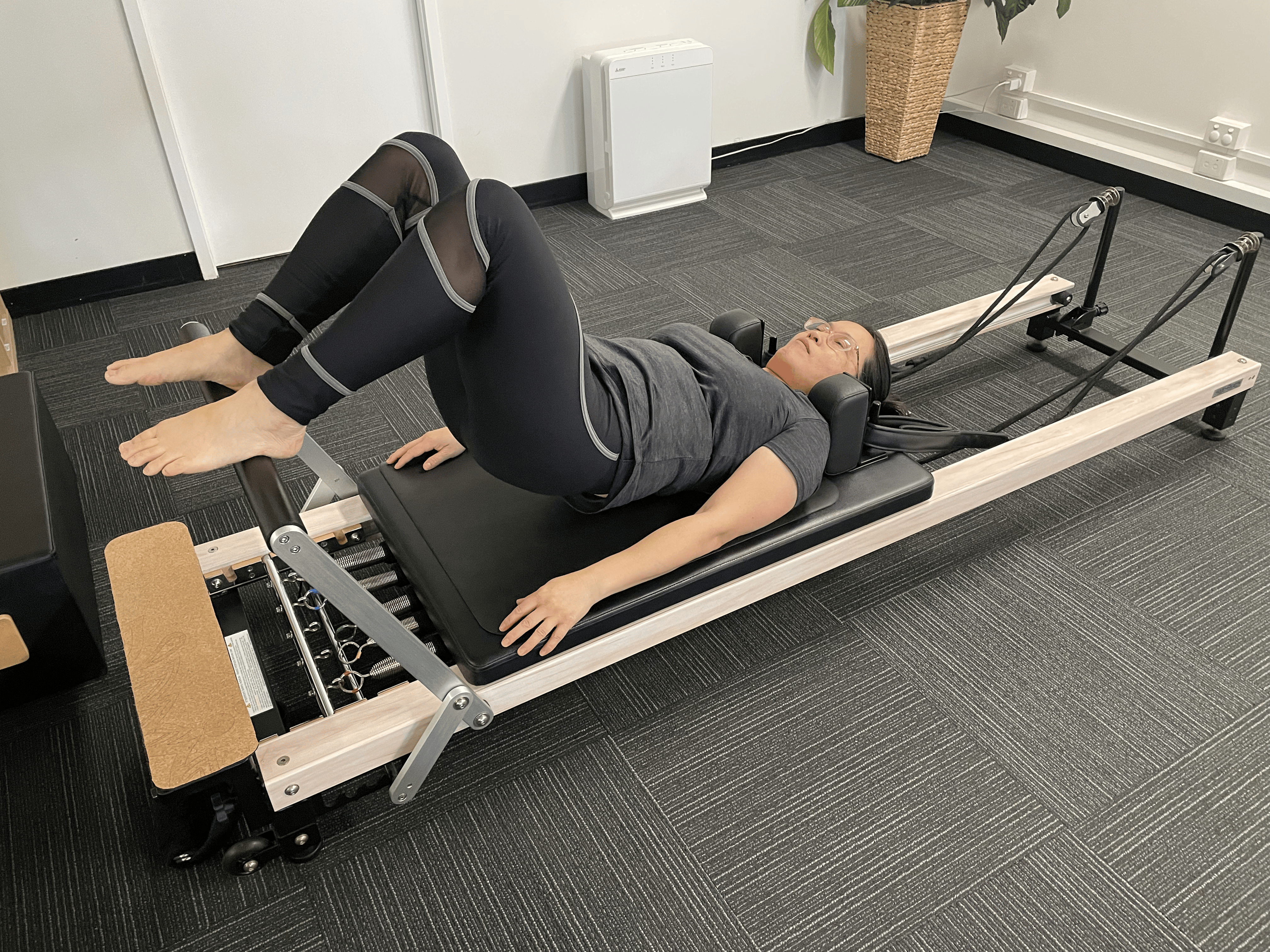
- Pelvic Curl
A foundational movement that strengthens the hamstrings and glutes while mobilising the spine.
Benefits:
- Improves spinal articulation
- Strengthens posterior chain
- Reduces lower back stiffness
Note this position is curling up and down of the spine, it’s not a straight lift up of the back, that is not the move. It’s a controlled spinal articulation.
The correct movement pattern is:
1) Start in neutral position.
2) Inhale to prepare at the bottom.
3) Exhale on the movement – scoop the abdominals in and rock the hip bones back, imprint, peel the spine up vertebrae-by-vertebrae.
4) Hips are lifted into a bridge pose and shoulders are up against the shoulder blocks.
5) Exhale on the movement down – rolling down, vertebrae-by-vertebrae, with the tail bone being the last to hit onto the carriage.
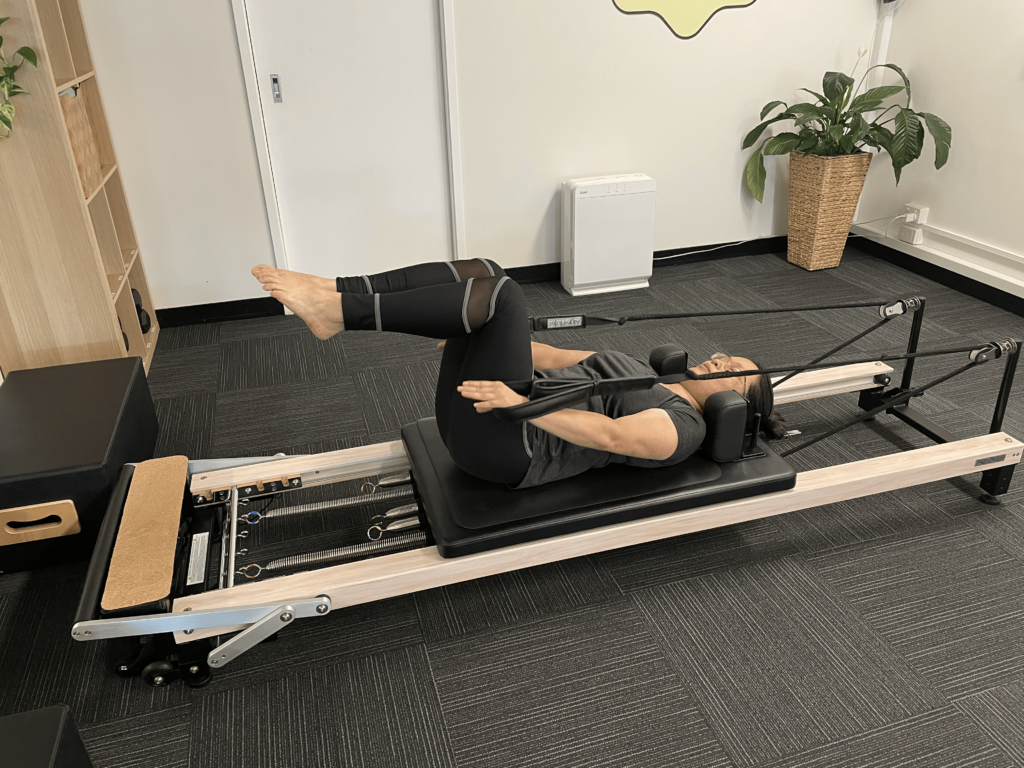
2) Supine Arm Work (Neutral Spine) or ‘Hands in Straps’
A gentle way to strengthen the core without loading the spine.
Benefits:
- Trains deep abdominal activation
- Supports neutral pelvic alignment
- Builds shoulder stability
The movement pattern is:
1) Legs in tabletop.
2) Hands holding the straps – bring tension onto the straps and palms facing the front. This is your ‘stop-start’ position.
3) Exhale – as hands come to pockets. Spine remains in neutral position.
4) Inhale – as hands return to the ceiling, to the ‘stop-start’ vertical position, still with a flat back and keeping legs in table top position.
Tip – there is always tension on the straps at the top of the range of movement and equally at the bottom range of movement.
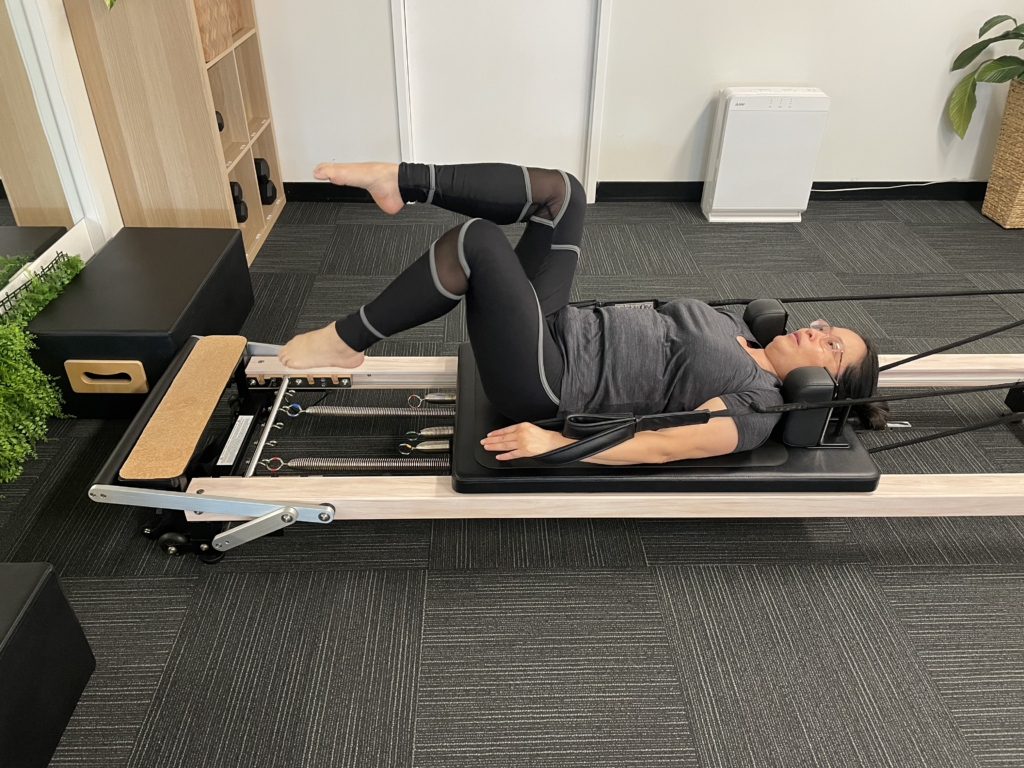
3) Knee Folds with Toe Taps
A simple but powerful stability exercise.
Benefits:
- Activates core stabilisers
- Prevents lower back arching
- Builds control for everyday movements
Setup
1) Lying on your back, with legs in table top, hands in straps.
2) Pull straps down to pockets – pause.
3) Lightly toe tap down on each side, tap only as far as you can, keeping your lower belly drawing gently inwards and not over arching the spine.
This movement reinforces neutral spine control and is a low load, high control movement.
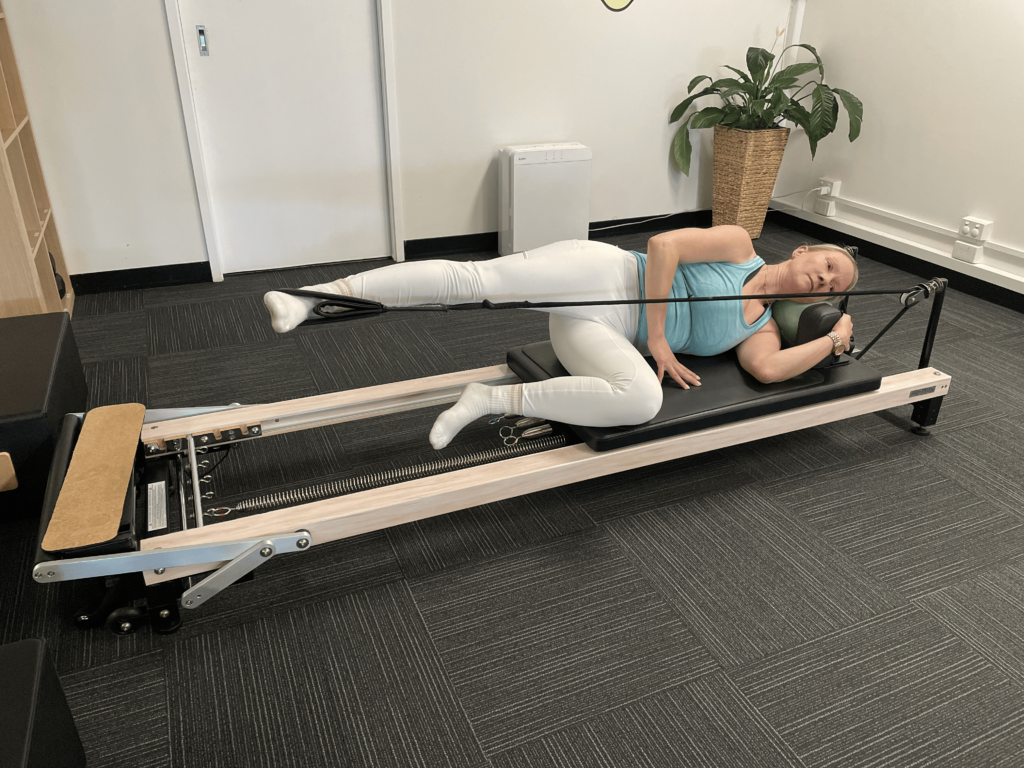
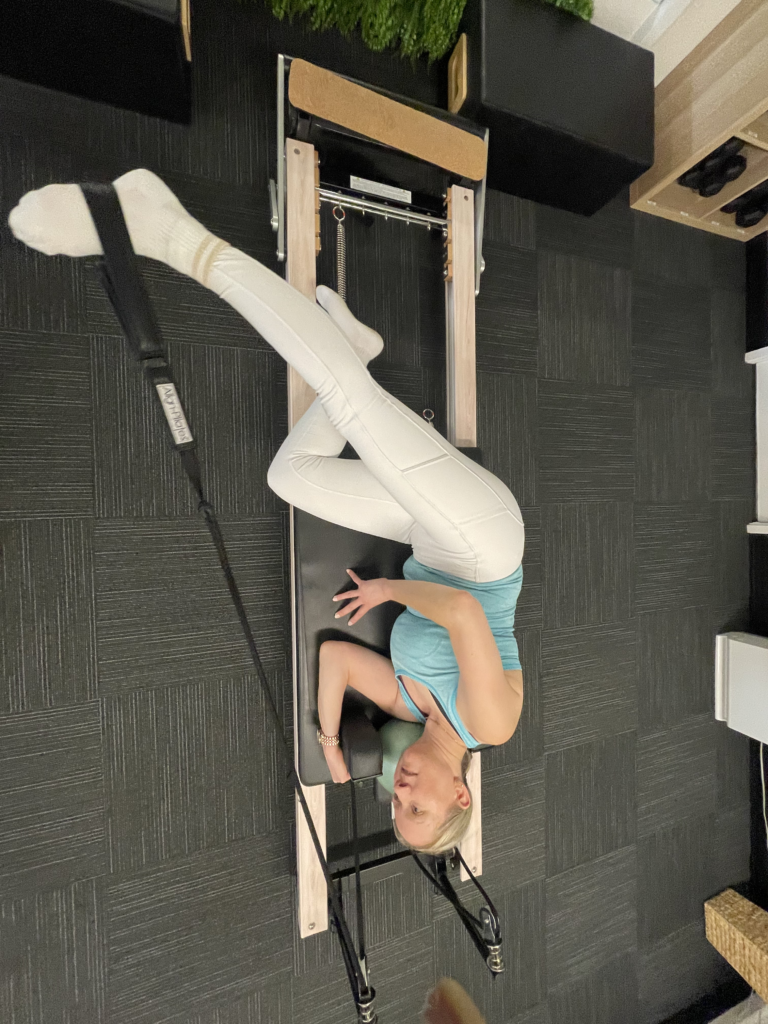
4) Side-Lying Leg Work
Targets hip abductors and lateral stabilisers — often weak in people with back pain.
Benefits:
- Strengthens glute medius
- Stabilises pelvis
- Reduces SI joint pain
- Straight leg extension down the middle of the foot bar.
- Football kick forward & back.
- Little lifts and lowers with straight leg.
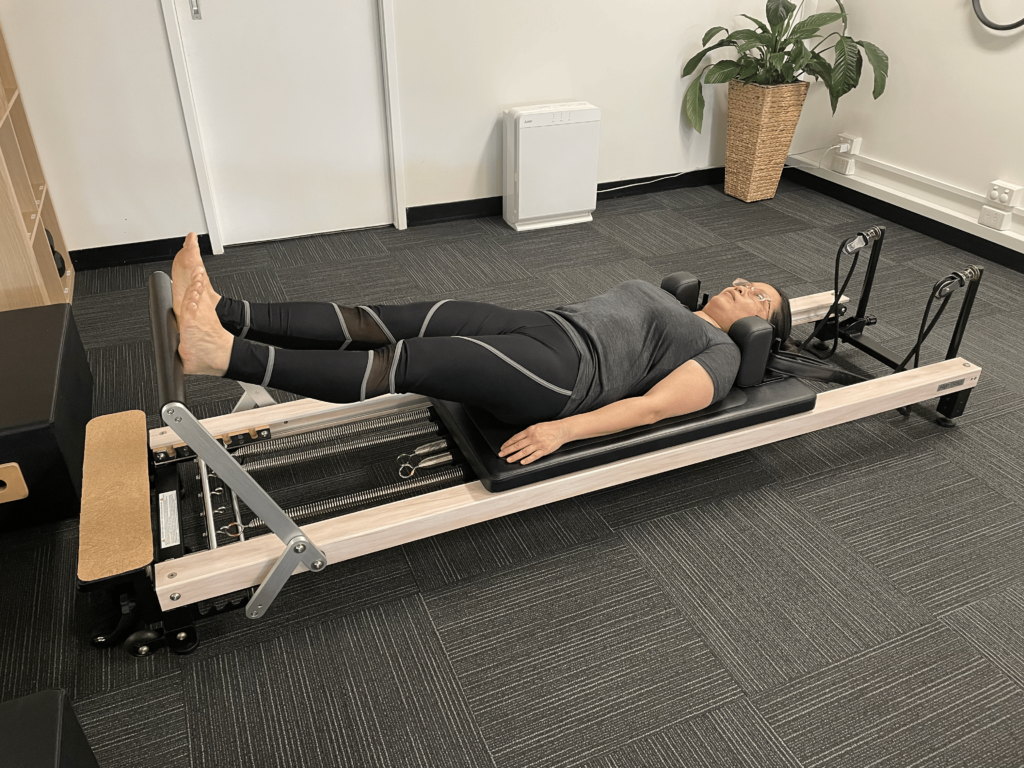
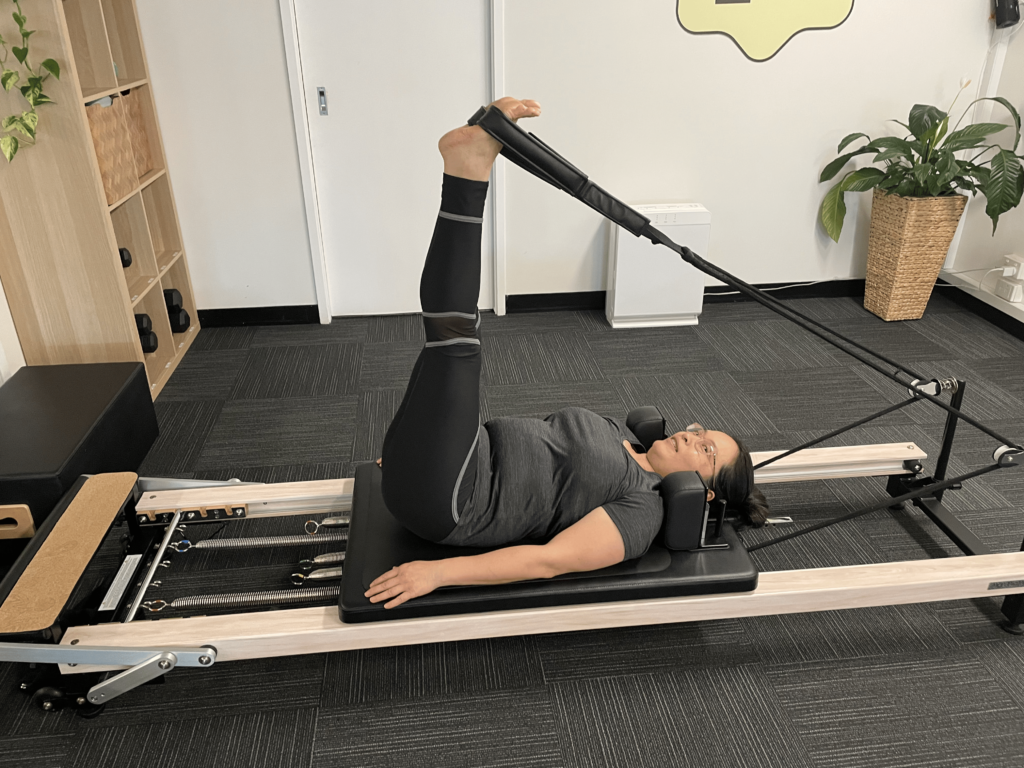
5) ‘Feet in Straps’ – straight pull down
Benefits:
- Hamstring flexibility
- Pelvic mobility
- Builds core control without spinal loading
Movement steps
1) Lying on your back with the long straps over your feet, with the headrest down/flat and hands down by pockets. Legs vertical towards ceiling, knees together, ankles together.
2) Exhale as movement of long legs down towards the foot bar.
3) Inhale as legs move towards ceiling again, not lifting the tailbone off the Reformer.
Tip – maintain equal co-ordination of the legs as they move towards the foot bar and then return vertically towards the ceiling.
Related Posts
Get your springs sorted on the Allegro II
The Allegro II by Balance body comes with 5 spring set. The colors that you…
Align Pilates Pro Reformer series
Align Pilates is a UK branded Reformer and is a high range performing Reformer machine…
What does your Pilates Reformer Futuristic Model look like?
Have you ever wondered what a futuristic Pilates Reformer would look like? Okay, we are…
No Comments